2026 Top DC Motor 3 Types You Need to Know?
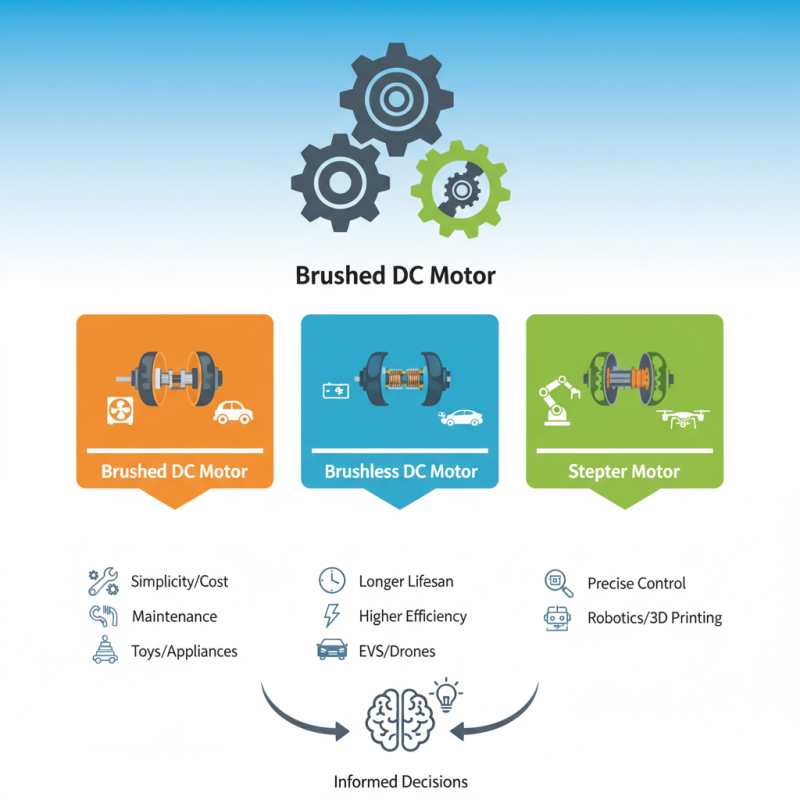
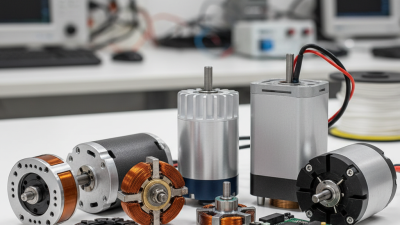
Understanding the fundamentals of DC motors is crucial for many industries. In 2026, three types of DC motors stand out: brushed, brushless, and stepper. Each type has unique roles and specific applications that impact performance and efficiency.
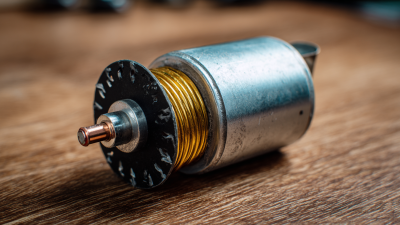
Brushed DC motors are known for their simplicity and cost-effectiveness. They are commonly used in toys and small appliances. However, they require maintenance due to brush wear, which can be a limitation. Brushless DC motors, in contrast, have a longer life span and higher efficiency. Their applications range from electric vehicles to drones.
Stepper motors provide precise control over movement, making them ideal for robotics and 3D printing. Yet, they can sometimes cause vibrations and instability at certain speeds. Understanding these qualities of the three types of DC motors will help you make informed decisions for your projects and applications in the ever-evolving tech landscape.
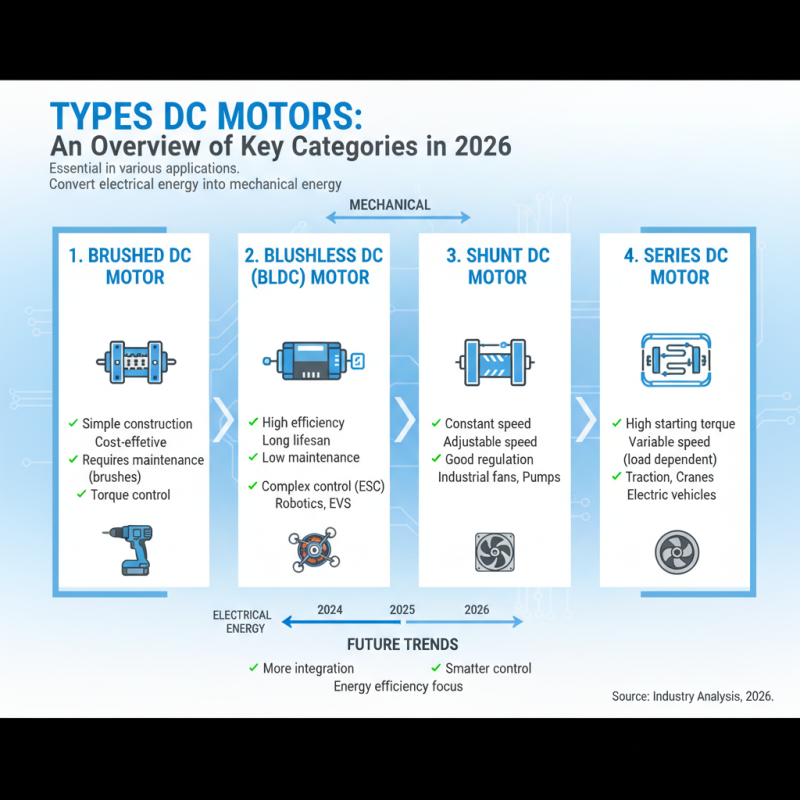
Types of DC Motors: An Overview of Key Categories in 2026
DC motors are essential in various applications. They convert electrical energy into mechanical energy. Understanding the main types can guide choices in 2026.
There are three primary categories of DC motors: brushed, brushless, and stepper. Brushed motors have simple designs. They are often cheaper and easier to control. However, they require maintenance due to brush wear. Brushless motors offer enhanced efficiency. They run cooler and last longer but come at a higher cost. Stepper motors excel in precision. They provide accurate control of position and speed, making them ideal for robotics.
Each type has its strengths and weaknesses. Brushed motors are popular for hobby projects, but reliability issues can arise. Brushless motors are preferred in high-performance applications. They might require complex controls. Stepper motors can be tricky to program. Users may need to fine-tune settings for optimal performance. The right choice depends on specific project needs.
Applications of DC Motors: Industries Leveraging Motor Technologies
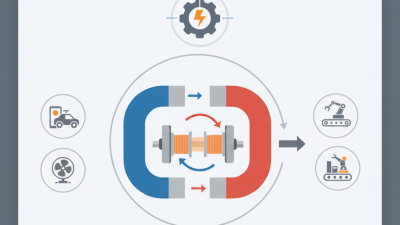
DC motors are versatile devices found in various industries. Their applications range from simple toys to complex robotics. Many sectors benefit from their efficiency and reliability.
In manufacturing, DC motors drive conveyors and assemble units. They provide precise control over movement. This accuracy enhances productivity but can lead to issues. Misalignment or wear can occur without regular maintenance. Engineers must regularly assess motor performance.
In the automotive sector, DC motors are essential for electric windows and seat adjustments. They deliver compact power solutions. However, environmental factors can affect their lifespan. Moisture and dust can shorten their operational life. Attention to these details is crucial for longevity.
DC motors also find a home in medical devices. From pumps to diagnostic equipment, these motors ensure precise operation. Reliability is vital in this field, as failures can have serious consequences. Regular testing and validation are necessary to maintain standards. Each application highlights the importance of specialized knowledge in utilizing these motors effectively.
Efficiency Ratings: Comparing Performance Metrics of Different DC Motor Types
When evaluating the efficiency of various DC motor types, several key performance metrics come into play. A common focus is the motor's efficiency rating, often expressed as a percentage. This percentage indicates how effectively an electric power input is converted into mechanical output. A brushless DC motor, for instance, offers high efficiency rates, typically exceeding 90%. It consumes less energy to achieve the same performance, reducing operational costs over time.
In contrast, brushed DC motors may show a lower efficiency, often around 75-80%. Their design includes brushes that cause friction and can lead to energy loss. While these motors are simpler and more affordable, they require more maintenance and have a shorter lifespan. This trade-off is significant when considering applications where efficiency and longevity are critical.
Understanding these performance metrics is essential not just for decision-making but also for optimizing designs. Engineers often face challenges matching motor types to specific applications. Conducting thorough testing and performance evaluations is necessary to ensure the selected DC motor meets the desired efficiency standards, considering both short-term and long-term needs.
Future Trends: Innovations Shaping the DC Motor Industry by 2026
The DC motor industry is witnessing rapid innovations that will shape its future. According to a recent report by the International Electrotechnical Commission, the market for DC motors is projected to grow by 8% annually by 2026. This growth is driven by the increasing demand for automation and robotics in various sectors. Advanced control systems are becoming standard to ensure precision. Improved efficiency is also a primary focus.
Battery technology is evolving. With the rise of electric vehicles, new materials are being explored for energy storage. This research is critical. A study by the Institute of Electrical and Electronics Engineers shows that combining lithium-ion with other technologies could boost performance. There’s a significant opportunity for manufacturers to adapt to these changes. However, challenges remain. The cost of implementing these new technologies can be overwhelming.
Sustainability is another driving force. Governments are pushing for greener solutions. In response, manufacturers are investing in eco-friendly materials. Yet, the transition isn’t seamless. Technical hurdles and supply chain issues persist. Understanding these trends is essential for staying competitive in the evolving market.
Market Insights: Economic Impacts on the DC Motor Sector and Forecasts
The DC motor sector faces significant economic challenges in 2026. According to a recent report by the International Electromechanical Authority, the global market for DC motors is projected to grow at a CAGR of 5.2% through 2028. This growth is driven by rising demand in industries such as automotive and manufacturing. However, the sector also grapples with supply chain disruptions that can hinder this progress.
Labor shortages and increased raw material costs are major concerns. A report from the Electric Drive Transportation Association highlighted a 12% increase in copper prices in the past year. These rising costs could squeeze profit margins for manufacturers. Additionally, geopolitical tensions can lead to inconsistency in material supply. Companies must adapt to these fluctuations or risk losing their competitive edge.
Policy changes also play a crucial role. With stringent regulations on energy efficiency, many companies are revising their production techniques. The emphasis on sustainable practices may require additional investment upfront. Yet, the long-term benefits could justify this shift. It’s important for firms to balance immediate financial pressures with future sustainability goals.