Leave Your Message

Top 10 Power Motor Types for Global Buyers

Choosing the right Power Motor can shape a machine’s efficiency, service life, and operating cost. Global buyers often compare rated power first, yet that number rarely tells the whole story. Torque at startup, speed control, duty cycle, cooling, noise, and maintenance needs can change the final decision.

This guide introduces ten widely used motor types, including AC induction motors, brushless DC motors, permanent magnet synchronous motors, servo motors, and stepper motors. Each type fits different working conditions. A conveyor may need steady torque for long hours, while a robotic joint requires precise movement and rapid response. An outdoor pump also faces dust, moisture, temperature changes, and unstable installation conditions.

Practical evaluation matters.

In real projects, engineers review manufacturer datasheets, test reports, efficiency ratings, protection levels, and available service support. Standards such as IEC and NEMA can improve comparison, but compliance does not guarantee perfect field performance. Installation quality, alignment, ventilation, and load variation still matter. I have seen efficient motors underperform because cooling paths were blocked or controls were poorly matched. That detail is easy to miss.

There is no universal winner. A low-cost motor may become expensive through downtime, replacement parts, or difficult maintenance. Conversely, a premium model may be unnecessary for a simple, stable application. This overview helps purchasing teams connect motor design with actual operating demands. It also encourages careful questions before ordering: What load will it face? How often will it start? Who will service it locally? Small oversights can create large costs.
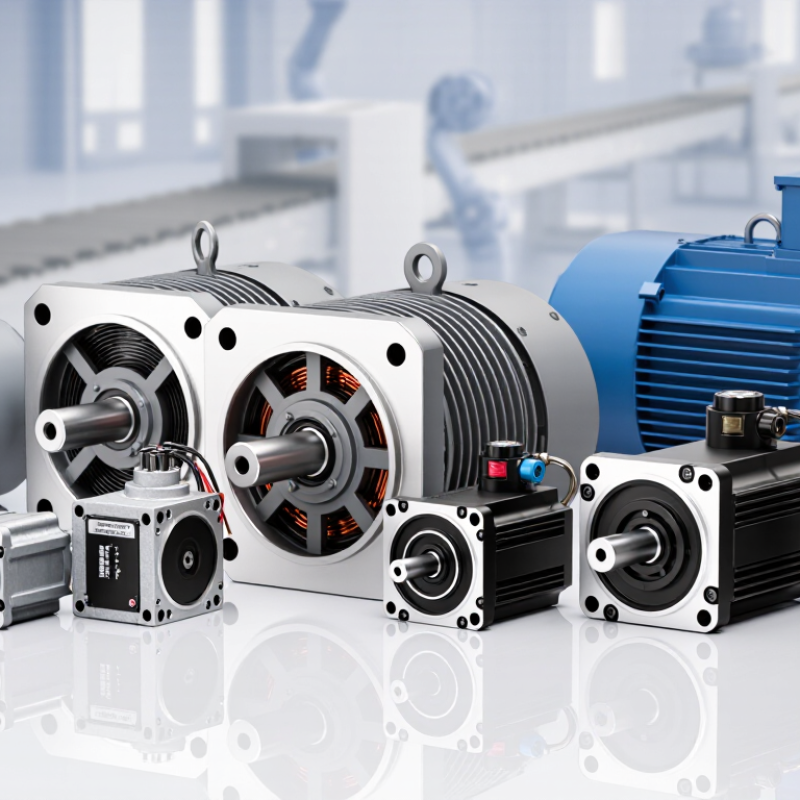
Top 10 Power Motor Types for Global Buyers

Defining Power Motors and Their Role in Global Applications

Top 10 Power Motor Types for Global Buyers

A power motor converts electrical energy into mechanical torque for motion, pumping, compression, or positioning. The term “power motor” is widely used in trade, but it is not a universal technical category. Engineers usually classify motors by current type, control method, torque profile, and operating environment.

The International Energy Agency reports that electric motor systems consume about 53% of global electricity. This figure explains their importance in factories, elevators, water systems, vehicles, and commercial equipment. Buyers commonly evaluate ten types: AC induction, synchronous, brushed DC, brushless DC, permanent-magnet synchronous, servo, stepper, universal, switched-reluctance, and gear motors.

Each type solves a different operating problem. Induction motors offer rugged performance for fans and conveyors. Servo motors provide controlled positioning in robotic equipment. Stepper motors move in defined increments, although they may lose torque at higher speeds. Gear motors trade speed for stronger output torque. Small details matter. A dusty workshop can quickly expose poor sealing.

The U.S. Department of Energy notes that efficient motor systems can reduce industrial energy use through better sizing, controls, and maintenance. Efficiency labels alone are not enough. Buyers should verify duty cycle, starting current, insulation class, cooling method, voltage tolerance, and service conditions. A technically efficient motor can still waste energy when oversized or poorly controlled. That uncomfortable point is often missed in purchasing discussions.
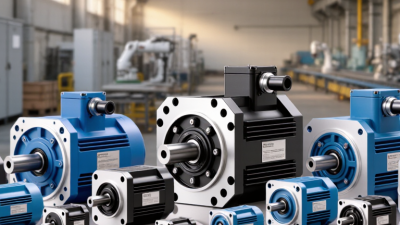
Classifying the Top 10 Power Motor Types by Design and Function

Top 10 Power Motor Types for Global Buyers

Classifying the Top 10 Power Motor Types by Design and Function

Motor selection starts with architecture, not marketing language. Induction motors use a rugged squirrel-cage rotor and suit pumps, fans, and compressors. Synchronous motors maintain precise speed under changing loads. Brushed DC motors offer simple control, but brush wear limits service life. Brushless DC motors remove mechanical brushes and improve efficiency in compact equipment. Permanent-magnet synchronous motors deliver strong torque density, especially in variable-speed drives.

The remaining five types serve more specific duties. Switched-reluctance motors tolerate heat and harsh environments, though their acoustic noise needs attention. Stepper motors move in controlled increments for positioning tasks. Servo motors combine feedback, drive electronics, and motor output for accurate motion. Universal motors provide high speed in portable equipment but can be noisy. Linear motors create direct motion without rotary transmission components. The International Energy Agency reports that electric motor systems consume roughly half of global electricity, making efficiency a purchasing priority. The U.S. Department of Energy also identifies motor-driven equipment as a major share of industrial electricity use.

Tips: Match torque, speed range, duty cycle, enclosure rating, and control method before comparing prices. Check efficiency at partial load, not only at rated output. A smaller motor may overheat. A larger motor may waste energy. Buyers should also question incomplete test conditions in supplier data sheets; this is where my own evaluations often need a second look. Data from IEC efficiency standards can support fair comparisons across markets.

Comparing Performance, Efficiency, Control, and Maintenance Requirements

Top 10 Power Motor Types for Global Buyers

Choosing a power motor starts with the load, not the catalog label. Induction motors offer rugged performance, simple control, and low maintenance for pumps, fans, and conveyors. Synchronous motors maintain steady speed and can improve power factor, but their controls may cost more. Permanent-magnet synchronous motors deliver high efficiency in compact equipment. They often suit electric vehicles, compressors, and precision machinery. Brushless DC motors provide efficient speed control and long service life, although electronic controllers require careful setup.

Brushed DC motors remain practical where low starting cost and straightforward control matter. Their brushes wear, especially under frequent cycling. Stepper motors provide accurate positioning without feedback in many applications, but they can lose torque at higher speeds. Servo motors combine feedback, rapid response, and precise motion. They perform well in robotics and packaging lines, yet tuning demands skilled technicians. Switched reluctance motors tolerate high temperatures and avoid permanent magnets, though acoustic noise can require design attention.

Universal motors create high speed and strong starting torque in compact tools, but their brushes and noise limit industrial use. Shaded-pole motors are inexpensive and reliable for small fans, though efficiency and starting torque remain modest. Field testing often reveals differences that datasheets hide. A motor rated highly for efficiency may perform poorly when oversized or lightly loaded. Maintenance access matters too. Leave room around terminals, sensors, and cooling paths. In practice, the best choice balances efficiency, control complexity, service skills, duty cycle, and local spare-part availability. Even experienced buyers sometimes underestimate installation quality.

Matching Motor Types to Industrial, Commercial, and Transport Needs

Top 10 Power Motor Types for Global Buyers

Matching motor types to operating conditions prevents costly oversizing. The IEA estimates that electric motor systems consume nearly half of global electricity. For factories, induction motors remain practical for pumps, fans, compressors, and conveyors. Synchronous motors suit constant-speed loads and high-efficiency production lines. Servo motors deliver precise positioning in robotics, packaging, and CNC equipment. Stepper motors offer controlled movement, though they may lose torque under sudden loads.

Commercial equipment needs compact, quiet, and dependable designs. Brushless DC motors support ventilation, medical equipment, warehouse automation, and battery-powered tools. Universal motors provide high speed in portable appliances, but brush wear needs attention. Switched reluctance motors tolerate heat and harsh environments, although vibration can complicate installation. DC motors still serve legacy machinery and variable-speed systems. Transport applications increasingly favor permanent-magnet synchronous and induction traction motors. The IEA reported over 14 million electric car sales in 2023, increasing demand for efficient traction systems. Yet, the highest-efficiency option is not always the best fit.

Tips: Check duty cycle, starting torque, enclosure rating, ambient temperature, and service access. Compare full-load efficiency, not only purchase price. A smaller motor can overheat. A larger motor can waste energy. Real operating data should guide the final choice. No selection chart is perfect. Local technicians may reveal constraints that specifications miss.

Top 10 Power Motor Types for Global Buyers - Matching Motor Types to Industrial, Commercial, and Transport Needs

Motor Type Operating Principle Typical Power Range Typical Speed Range Typical Efficiency Best-Fit Applications Key Advantages Main Considerations
Three-Phase AC Induction Motor Uses a rotating magnetic field in the stator to induce current and torque in a squirrel-cage or wound rotor. 0.12 kW to more than 10 MW Approximately 750–3,600 rpm at 50/60 Hz, depending on pole count and slip Approximately 80–97% at rated load; larger premium-efficiency units can exceed this range Pumps Fans Compressors Conveyors Industrial machinery Rugged construction, widely available, relatively low purchase cost, and simple maintenance. Starting current can be high; speed control usually requires a variable-frequency drive for efficient regulation.
Synchronous Reluctance Motor Produces torque from the rotor’s magnetic reluctance difference while the rotor synchronizes with the stator’s rotating field. Approximately 1.1 kW to 500 kW Typically 750–3,600 rpm, synchronized with supply frequency Approximately 90–97% in suitable industrial ratings Pumps HVAC systems Fans Compressors Energy-saving machinery High efficiency, low rotor losses, and good performance over variable-speed operating ranges. Normally requires a compatible drive; control and commissioning are more specialized than for standard induction motors.
Permanent-Magnet Synchronous Motor Uses permanent magnets on or inside the rotor to create a synchronous rotating magnetic field. Approximately 0.1 kW to several MW Typically 500–6,000 rpm; higher speeds are possible with specialized designs Approximately 90–98% Industrial pumps Robotics Elevators Electric compressors Electric vehicles High power density, strong low-speed torque, and excellent efficiency at variable load. Usually needs an inverter; magnet materials add cost and may require thermal and demagnetization management.
Brushless DC Motor Electronic commutation switches stator windings while permanent magnets on the rotor provide torque. Approximately 5 W to 100 kW About 500–30,000 rpm, depending on design and load Approximately 80–95% Fans Pumps Power tools Drones Light electric mobility High efficiency, compact size, low maintenance, and good controllability. Requires an electronic controller and position feedback or sensorless control; electromagnetic compatibility must be considered.
Brushed DC Motor A mechanical commutator and brushes switch current in the armature to produce continuous torque. Approximately 1 W to 500 kW About 500–10,000 rpm, depending on voltage, winding, and load Approximately 75–90% Battery equipment Winches Actuators Small vehicles Legacy industrial systems Simple speed control, high starting torque, and easy integration with battery-based systems. Brush and commutator wear create maintenance requirements, electrical noise, and limitations in dusty or explosive environments.
Servo Motor A motor used with a closed-loop controller, encoder or resolver, and feedback system for precise position, speed, or torque control. Approximately 50 W to 500 kW Commonly 1,000–6,000 rpm; peak speeds vary by model Approximately 85–95% for the motor, excluding drive losses Robotic arms CNC machines Packaging Printing Automated assembly High accuracy, rapid acceleration, strong dynamic response, and repeatable positioning. Higher system cost, greater control complexity, and the need to size the motor, drive, feedback device, and gearbox together.
Stepper Motor Moves in discrete angular steps as electronically controlled phase windings are energized in sequence. Approximately 1 W to 5 kW Typically 100–1,500 rpm; torque decreases as speed increases Approximately 60–85%, depending on speed, current, and control method 3D printers CNC equipment Medical instruments Valve actuators Laboratory automation Accurate incremental motion, strong holding torque, and straightforward open-loop control for suitable loads. Can lose steps under overload, may resonate, and often consumes current while holding position.
Switched Reluctance Motor Generates torque by aligning salient rotor poles with energized stator poles through controlled switching. Approximately 0.5 kW to 1 MW Approximately 500–20,000 rpm, depending on configuration Approximately 80–95% Pumps Compressors Traction systems High-speed drives Harsh environments Robust rotor, no permanent magnets, wide speed range, and good tolerance of high-temperature operation. Torque ripple and acoustic noise can be significant; advanced control and power electronics are normally required.
Universal Motor A series-wound motor that can operate from either AC or DC supply, using brushes and a commutator. Approximately 50 W to 3 kW About 3,000–30,000 rpm Approximately 60–85% Portable tools Vacuum cleaners Kitchen equipment Small appliances High starting torque, high power-to-weight ratio, and compatibility with AC or DC power sources. Brush wear, noise, electromagnetic interference, and lower efficiency make it unsuitable for many continuous-duty applications.
Electric Traction Motor A high-torque motor system optimized for variable-speed propulsion, regenerative braking, and frequent acceleration. Approximately 20 kW to more than 1 MW per vehicle or drive system Motor speed commonly ranges from 1,000–20,000 rpm, with reduction gearing often used Approximately 85–97% over favorable operating regions Electric cars Buses Rail vehicles Material-handling vehicles Marine propulsion High torque density, wide speed range, regenerative braking capability, and efficient energy use. Requires an inverter, battery or electrical supply, thermal management, safety controls, and careful duty-cycle matching.
Buyer’s note: Power, speed, efficiency, torque, enclosure rating, insulation class, cooling method, duty cycle, ambient conditions, and control requirements should be verified against the actual operating profile. The ranges shown are representative industry values and may vary by motor size, design, load point, voltage, frequency, and application.

Evaluating Voltage, Standards, Sourcing, and Lifecycle Costs Globally

Choosing among the top ten power motor types requires more than comparing rated horsepower. Induction, synchronous, servo, stepper, brushless DC, brushed DC, switched reluctance, universal, gear, and linear motors serve different operating conditions. In field assessments, voltage compatibility often decides success before efficiency does. A 400-volt, 50 Hz motor may not suit a 460-volt, 60 Hz installation. Confirm phase count, starting current, insulation class, and control requirements with the local engineering team.

Global standards also influence sourcing decisions. IEC dimensions may differ from NEMA mounting sizes, even when power ratings appear similar. Check terminal markings, shaft dimensions, enclosure ratings, and required certifications before requesting quotations. A dusty workshop may need IP55 protection, while a washdown area can demand stronger sealing. Local service capacity matters too. A low purchase price becomes expensive when bearings or drives require long international shipping.

Lifecycle cost deserves a practical calculation. Include energy use, inverter losses, maintenance hours, spare parts, freight, and planned downtime. High-efficiency synchronous or brushless designs can reduce operating costs, but their controls may increase commissioning complexity. Servo systems offer precise motion, although they can be excessive for a constant-speed pump. We once underestimated installation training, and the resulting delay weakened the expected savings. No selection is perfect. Recheck assumptions using real load data, seasonal voltage variation, and at least one year of operating records.

Top 10 Power Motor Types for Global Buyers – Evaluating Voltage, Standards, Sourcing, and Lifecycle Costs Globally

The chart compares representative full-load efficiency with a relative 10-year operating-cost index for common motor technologies. Lower lifecycle-cost index values indicate lower electricity cost under the same mechanical output, duty cycle, and energy-price assumptions.

Values are indicative engineering benchmarks and vary by motor size, load profile, control system, regional voltage, grid frequency, certification requirements, and application. Typical voltage and standards are provided in the chart tooltips.